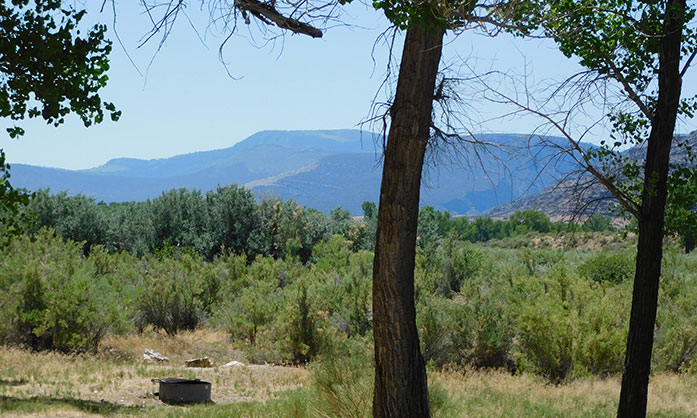
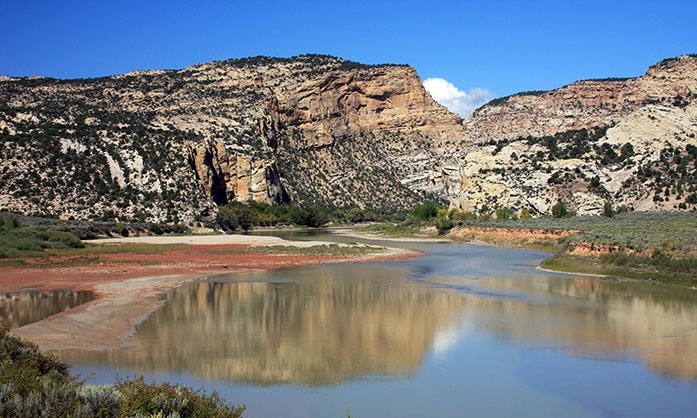
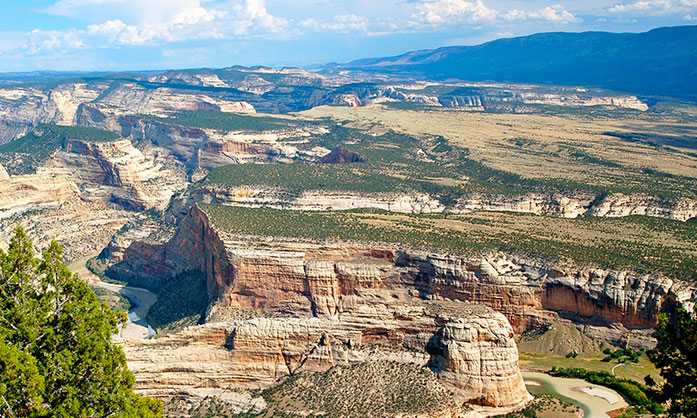
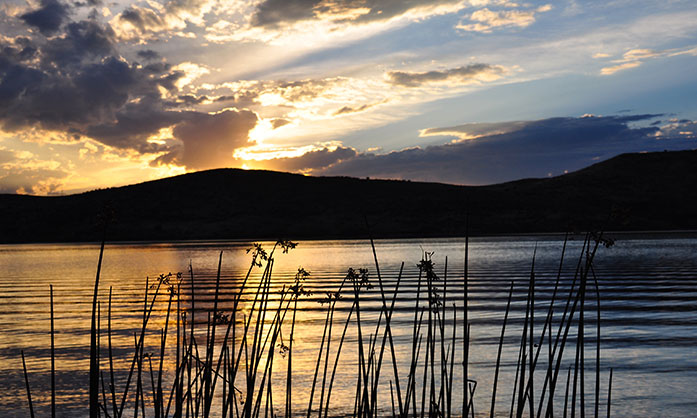
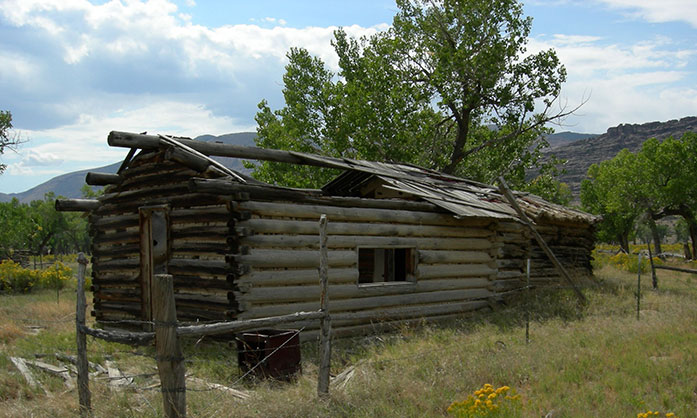
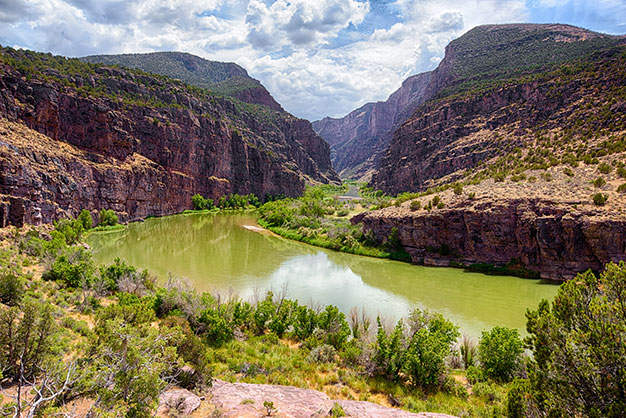
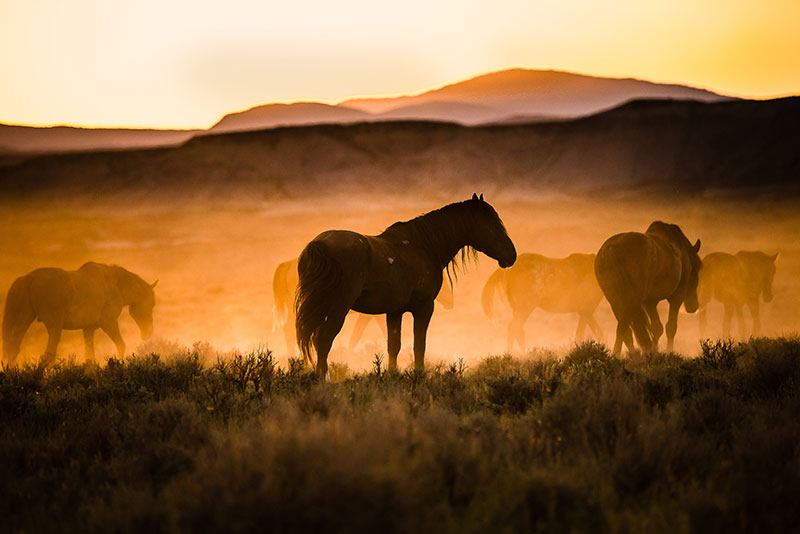
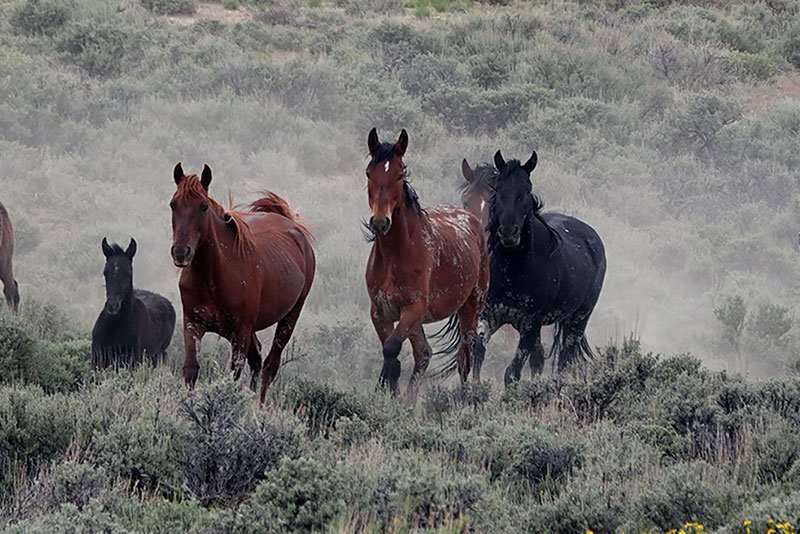
On the open sagebrush of Northwest Colorado, the wild horses of Sand Wash Basin move across ridgelines and waterholes with the drama of a Western film. This is one of the most accessible places in the region to responsibly observe free-roaming mustangs—often in small bands led by mares and guarded by stallions. Bring a telephoto lens, patience, and a respectful mindset. Pair your visit with a night in Craig and nearby adventures at Dinosaur National Monument, the Green & Yampa “Wild Rivers” corridor, or sunset at Elkhead Reservoir.
Trip Basics
Location: About 45–50 miles west/northwest of Craig on BLM-managed public lands. Cell coverage is limited; download Area Maps and bring a paper backup.
Roads: Graded dirt and two-tracks that can become slick or impassable when wet or snowy. High-clearance recommended after storms; avoid driving on saturated surfaces.
Services: No fuel, water, or food in the basin. Top off in Craig, and consider Lodging there or in nearby towns.
Seasons & timing: Spring and fall bring mild temps and good light. Summer mornings are calmest; afternoons can be windy with fast-changing weather.
Stay a safe distance from horses (at least 100 feet is a common minimum guidance), use your vehicle as a blind when possible, and let horses choose their path. Never surround bands, separate mares and foals, or block access to water. Pack out everything, keep dogs leashed, and give the right of way on narrow two-tracks. Review BLM guidance before you go and follow any temporary rules during gather or fertility-control operations.
Finding the Horses
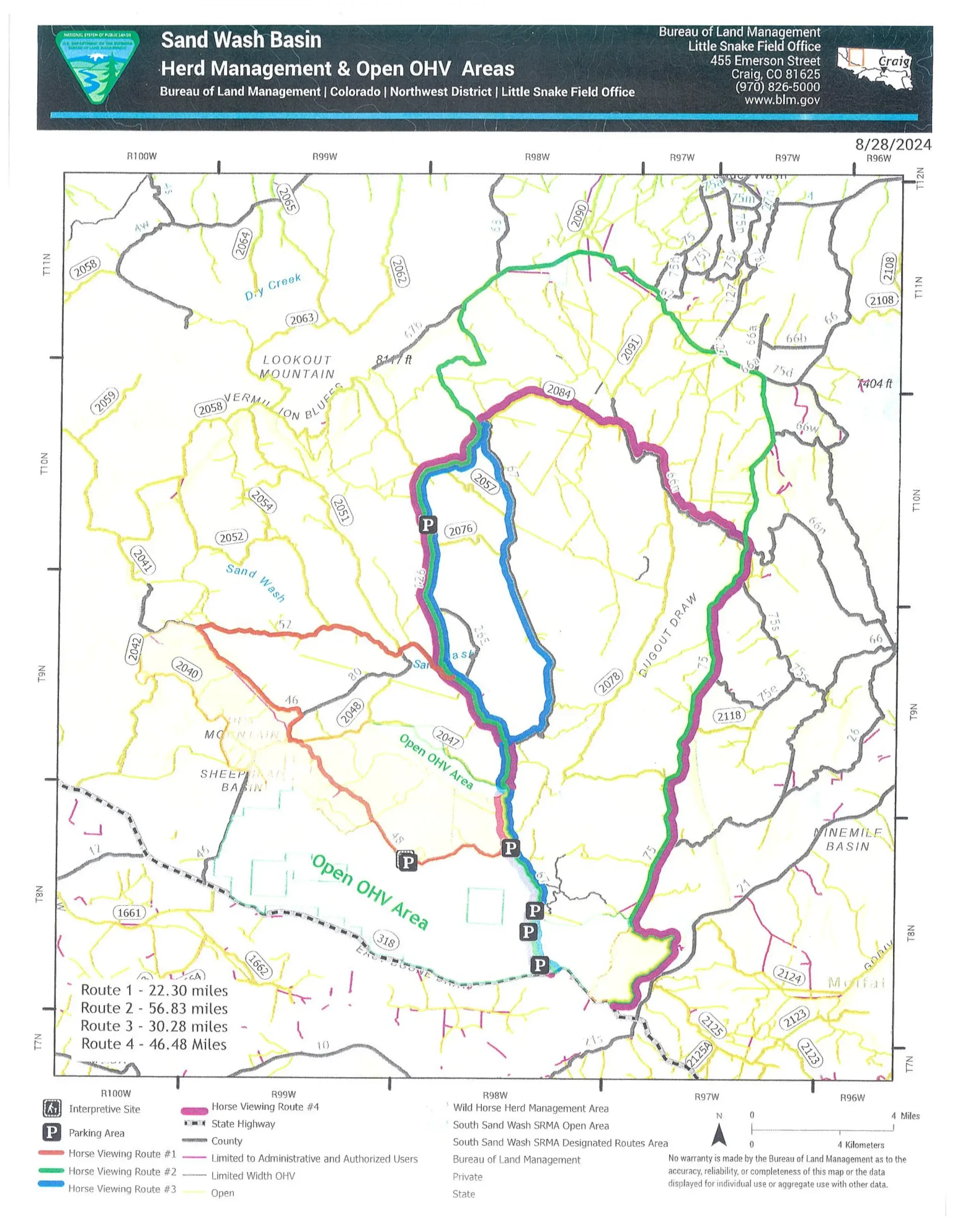
Horses range widely based on water, forage, and weather. You may spot fresh tracks around water sources, see dust plumes on distant flats, or notice sentry stallions posted on low hills. Drive slowly, stop often, and scan with binoculars. If you don’t see horses right away, enjoy the wide-open landscape—antelope, raptors, and songbirds add to the experience. For orientation, start with our Directions page and Area Maps; the Craig Chamber & Visitor Center can point you to current access notes.
Photography Tips
Lenses: 300–600mm helps you keep your distance while capturing intimate behavior.
Light: Sunrise and sunset deliver warm tones and lower heat shimmer; mid-day favors silhouettes and dust backlit shots.
Etiquette: If horses begin to bunch, change direction, or fixate on you, you’re too close. Back off slowly and watch for foals.
Composition: Include the sage, rimrock, and sky for context—Sand Wash images shine when they show the herd in its landscape.
What You’ll See
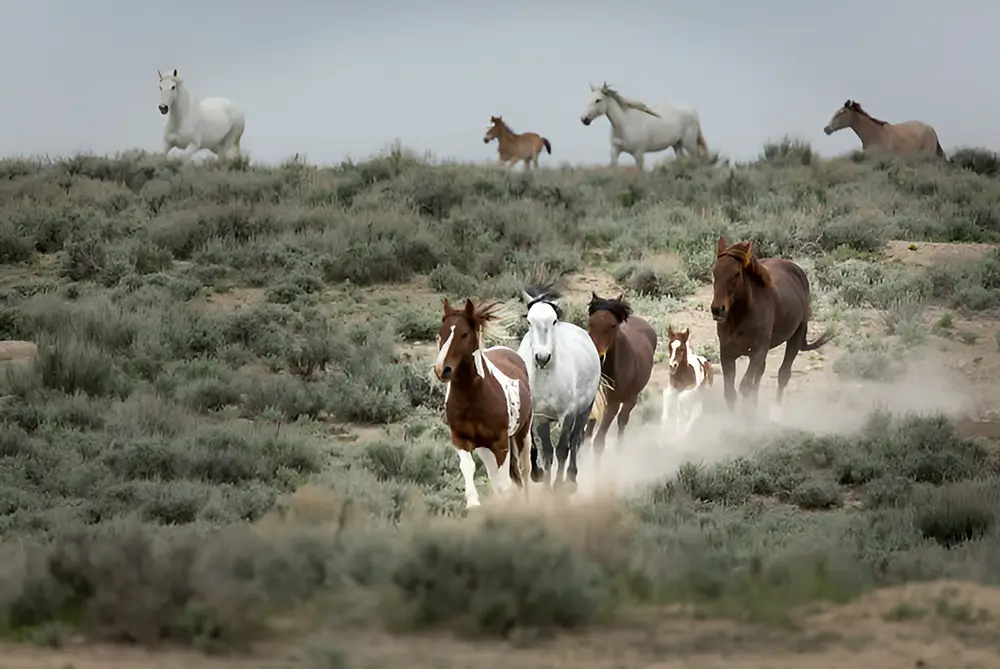
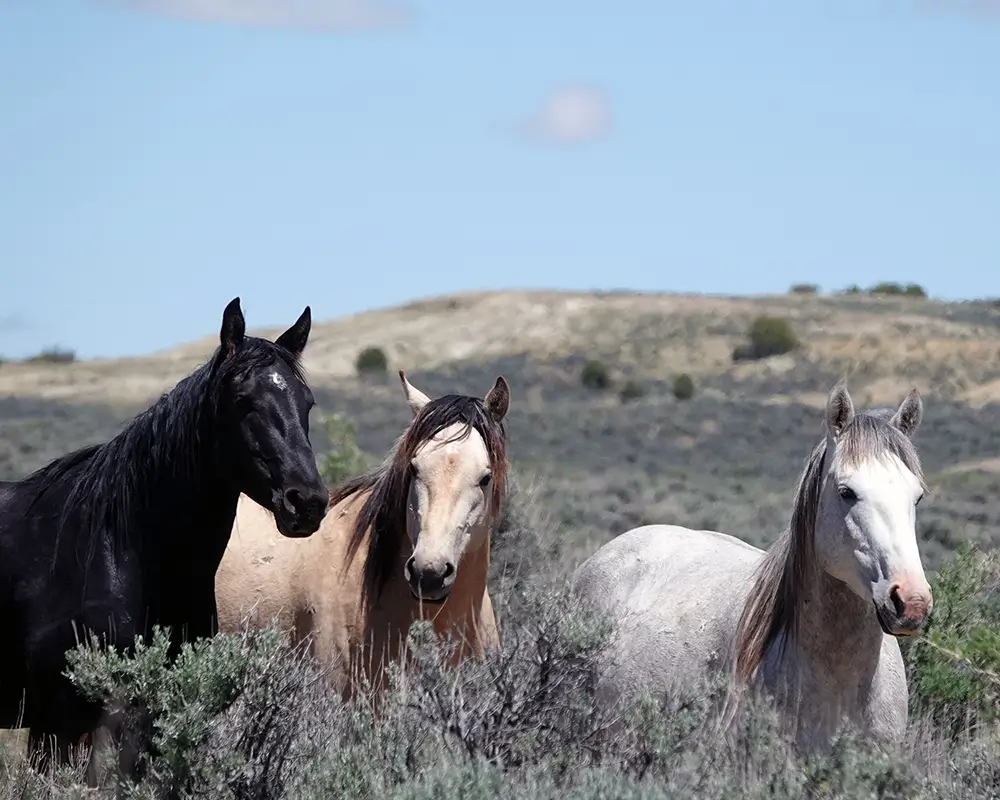
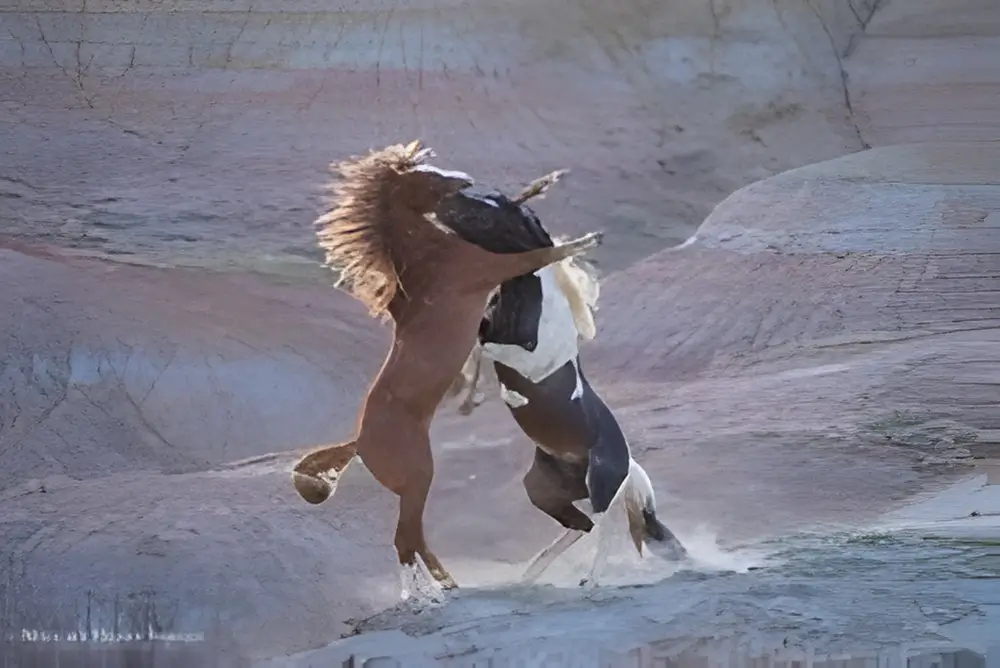
Expect a mix of colors from grays to sorrels and paints, with bands shifting across ridges and draws. Spring brings new foals and bright greens; late summer dust and evening storms add drama. In autumn, cooler air and angled light make for long-view panoramas. You may witness stallion sparring from a distance—give them room; it’s part of herd dynamics.
Safety & Preparedness
Vehicle & tires: Full-size spare, jack, and plug kit. Reduce speed on washboards and avoid soft shoulders.
Weather: Carry extra layers, sun protection, and water. If lightning threatens, return to your vehicle and avoid high points.
Navigation: Offline maps, paper atlas, or GPS. Tell someone your route and expected return.
Wildlife: Antelope and deer cross roads quickly—drive slowly, especially at dawn/dusk.
Sample Itineraries
Half-Day Scout
Depart Craig at sunrise with fuel, snacks, and water.
Cruise the main two-track loop, stopping at high points to glass.
Mid-morning photos near a water source—stay distant and quiet.
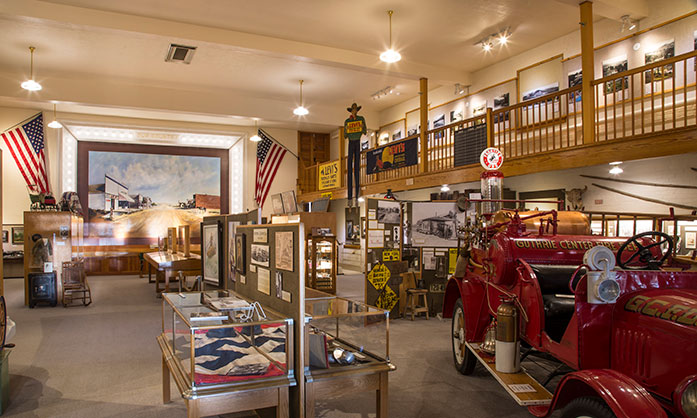
Return to Craig for lunch; add an afternoon museum stop from Museums in Craig.
Full-Day “Herd & Canyons”
Sunrise viewing in the basin; keep moving until you find bands.
Early afternoon break in town for fuel and supplies.
Late-day golden hour at the horses or a rim overlook along the Wild Rivers route.
Two-Day Photographer’s Plan
Day 1: Dawn in Sand Wash; mid-day editing/rest; sunset return. Overnight in Craig—see Lodging.
Stay at least 100 feet away as a general rule, farther if horses change behavior, bunch up, or if foals are present. Use long lenses and your vehicle as a blind when possible.
High-clearance is helpful after storms or during wet seasons; 4WD provides margin on muddy two-tracks. Avoid travel on saturated roads to protect the landscape and prevent getting stuck.
Primitive, leave-no-trace camping is typically allowed on BLM land unless otherwise posted. There are no services—bring water, pack out waste, and follow current fire restrictions.
Spring and fall generally offer milder temperatures, active herds, and good light. Summer sunrise is excellent for calm air; winter visits require careful planning for cold and road conditions.
Review the BLM Sand Wash Basin HMA page for access information, herd management updates, and any active gather operations. For visitor logistics, the Craig Chamber & Visitor Center can help with current road and service notes.
For background on free-roaming mustangs and how they’re managed, a concise overview can help you understand what you’re seeing on the range. Start with a general primer, then consult BLM updates for herd-specific information and responsible viewing guidelines.
Current Conditions & Access: Roads are unpaved and weather dependent; services are minimal. Review the Bureau of Land Management information for Sand Wash Basin HMA before you go and check for any gather operations, closures, or seasonal restrictions. BLM Sand Wash Basin HMA


 DISCOVER